EN 388 cut & impact gloves EN 1492 lifting slings Ice-pack cooling vests
tao@kuangshitrading.com  ·  Replies within 1 business day
KS KUANGSHI SAFETY Industrial Safety Equipment
Home / Lifting slings & webbing

Lifting slings and webbing

Flat woven webbing slings to EN 1492-1 and polyester round slings to EN 1492-2, from 1 t to 100 t. Colour-coded to working load limit, safety factor 7:1, with a durable identification label and a declaration of conformity in every shipment.

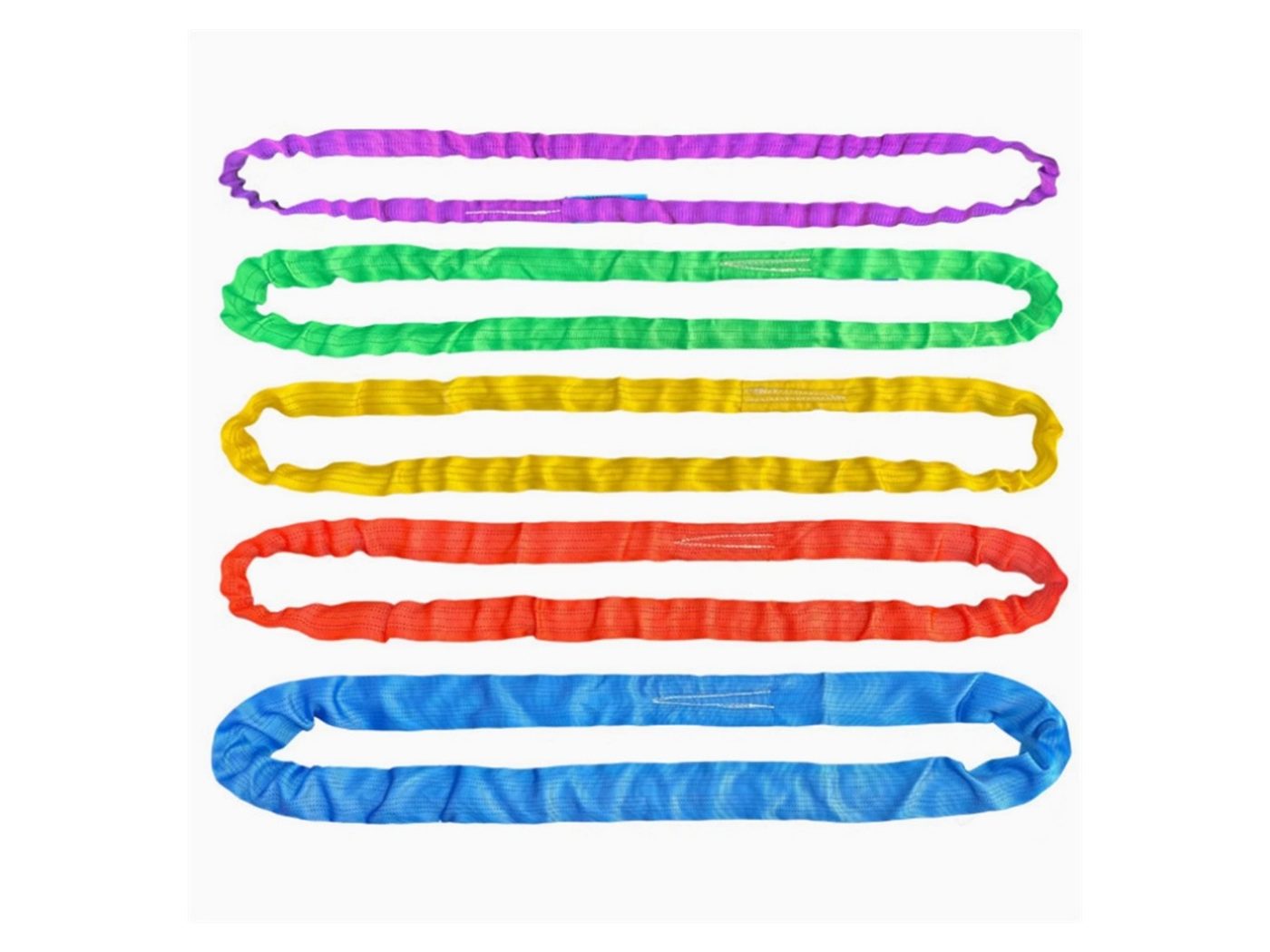
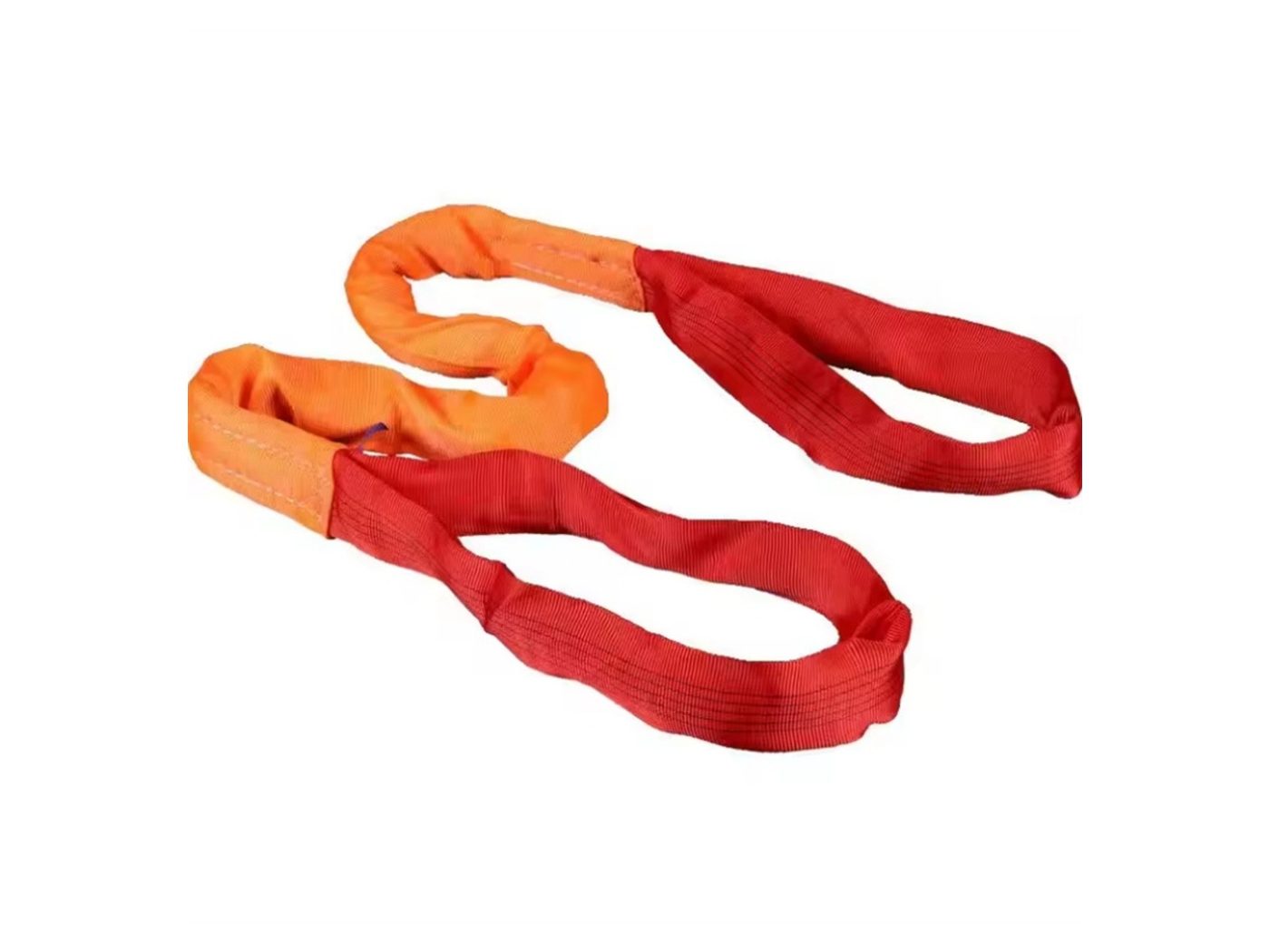
Polyester round lifting slings in the EN 1492 colour code, violet to blue by working load limit Red and orange polyester round lifting slings with reinforced eye-to-eye ends and sewn identification labels
Colour is not decoration

The colour tells the rigger the capacity

EN 1492 uses a fixed colour code so that capacity can be read at a glance on the floor, without reading a label. It is one of the most useful safety features in the whole category, and it is also the first thing counterfeit slings get wrong.

EN 1492 working load limit colour code Straight lift. Reduced capacity applies at other lifting angles — see the mode factor table below.
ColourWLLColourWLL
Violet1 tGrey4 t
Green2 tRed5 t
Yellow3 tBrown6 t
Blue8 tOrange10 t +
If the colour does not match the label, do not use it

A sling whose sleeve colour disagrees with its WLL is either counterfeit or mislabelled. This is the single fastest visual check available and it costs nothing. We flag this during inspection because it is one of the most common faults we find in newly audited factories.

Product range

Configurations

Both product families are supplied as single-leg, two-leg or four-leg assemblies, with or without master links and shackles, in standard or custom effective working lengths.

EN 1492-1 flat woven webbing slings

Flat woven polyester, protected by a continuous tubular sleeve. Softer and easier to handle than chain, with no risk of marring painted or finished surfaces. Usually the preferred choice for load stability on sensitive loads.

  • Materials: polyester (PES) standard, polyamide (PA) where higher strength is needed
  • WLL: 1 t to 20 t standard, up to 100 t on request
  • Widths: 32 / 50 / 65 / 90 / 100 / 120 mm
  • Temperature: −40°C to +100°C for polyester and polyamide
  • Marking: WLL, EWL, standard reference, manufacturer ID, traceability code, date of manufacture

EN 1492-2 polyester round slings

A continuous loop of high tenacity core yarn inside a protective woven sleeve. More flexible than webbing and easier to wrap around irregular or awkward loads, at the cost of a lower safe working load in some lifting modes.

  • Materials: polyester (PES), polyamide (PA), polypropylene (PP)
  • WLL: 1 t to 20 t standard, larger capacities on request
  • Ratio: safety factor 7:1 on the minimum breaking force
  • Temperature: −40°C to +100°C (PES / PA); −40°C to +80°C (PP)
  • Warning: polyester is not suitable for alkaline environments
Lifting mode and angle factors Applied to the rated WLL. Always use the sling closest to the load and the longest sling that allows the required reach.
Lifting configurationIllustrationMode factorNote
Single straight lift Vertical, one leg 1.00 Rated capacity applies in full
Choke hitch (U) Loop under the load 0.80 Not to be used on loads with sharp edges
Basket at 90° Two legs at right angles 0.70 Choke angle must not exceed 120°
Basket at 60° Two legs at 60° 0.85 Higher capacity than a 90° basket
Basket at 120° Two legs at 120° 0.50 Significant capacity loss
Document pack

Certificates that survive an audit

  • Declaration of Conformity to Regulation (EU) 2016/425 / 2006/42/EC, stating the applicable standard and the standard version
  • 2.1 works certificate available on request
  • UKCA declaration for UK-bound shipments
  • Proof of 7:1 safety factor — breaking force figures against the declared WLL, per batch on request
  • Traceability records linking every carton to the yarn lot and the test reference
  • User instructions in the language of the end market, with the inspection and rejection criteria
How slings fail in service

Chemical attack, heat damage, cuts from sharp edges, and UV degradation from outdoor storage. A sling that has been in an alkaline environment may look perfectly fine and still have lost a large part of its strength. This is why the material and the environment have to be specified together, and why we ask what the sling will be used around.

Use the right protection for sharp edges

Never place a sling directly over a sharp edge. Use corner protectors or a protective sleeve. If the load routinely has sharp edges, say so at enquiry — it affects whether flat webbing or a round sling is the right choice at all, and it affects the inspection interval you should be recommending to your customer.

Tell us the load and the lifting mode.

WLL, number of legs, length, material and the fittings you need. We will come back with the configuration, the mode factors that apply and the documents that ship with it.